Hearing loss isn't only about age. A significant portion of hearing damage is caused — and accelerated — by everyday habits that most people never connect to their ears. The damage is usually silent, painless, and cumulative. By the time it's noticeable, years of wear have already taken place.
Here are five habits worth knowing about.
1. Listening Through Earbuds and Headphones at High Volume
This is the most significant and fastest-growing cause of noise-induced hearing loss among younger adults. The WHO estimates that over 1 billion young adults are at risk of permanent hearing loss due to unsafe listening practices — primarily through personal audio devices.
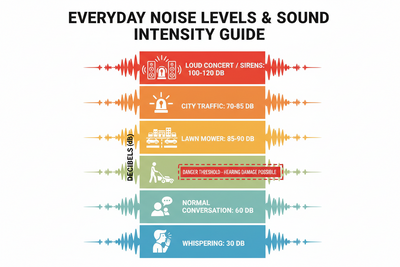
Headphones at maximum volume can reach 110 dB — a level at which hearing damage can occur in under 15 minutes. The 60/60 rule is a useful baseline: listen at no more than 60% of maximum volume, for no more than 60 minutes at a time without a break.
2. Smoking
Smoking damages hearing through multiple pathways. Nicotine and carbon monoxide restrict blood flow to the inner ear, depriving the delicate hair cells of the oxygen they need to function. Population studies have found that smokers are significantly more likely to have hearing loss than non-smokers, independent of noise exposure. Research also suggests that people exposed to secondhand smoke are at elevated risk.
3. Poor Cardiovascular Health
The inner ear is among the most vascularly sensitive organs in the body. It depends entirely on a steady, uninterrupted supply of blood to maintain the fluid environment in which hair cells function. Hypertension, high cholesterol, and cardiovascular disease all reduce the quality of that blood supply — and have been consistently associated with higher rates of sensorineural hearing loss.
What's good for your heart is good for your ears. Regular exercise, a healthy diet, and blood pressure management all support long-term hearing health.
4. Ignoring Warning Signs After Noise Exposure
Ringing in the ears after a loud event — a concert, a sporting event, a night out — is a temporary warning signal. It means the hair cells in your inner ear have been overstimulated and are temporarily fatigued. Most of the time, they recover. But repeated exposure to that level of noise eventually causes permanent damage — and the line between temporary and permanent isn't always obvious until it's crossed.
Taking the warning seriously — using earplugs, moving away from speakers, allowing recovery time — is one of the most effective preventive habits you can build.
5. Skipping Hearing Checkups
Most people check their vision regularly but almost never check their hearing. Yet hearing changes gradually — often invisibly — for years before they become obvious. The average person waits a decade between first noticing a change and seeking professional help. During that decade, the brain adapts, relationships adjust around the difficulty, and the window for easier intervention narrows.
A hearing test is fast, painless, and informative. Making it part of your regular health routine — especially after 50 — is one of the simplest preventive steps available.
Start with Soundbright — hearing aids from $99 with a 45-day risk-free trial. Learn more →