You've probably experienced a ringing in your ears after a loud concert or a long flight. For most people, it fades within hours. But for millions of others, the ringing never fully stops — and it can be easy to confuse what's actually going on.
Tinnitus and hearing loss are distinct conditions. They often occur together, but they're not the same thing — and understanding the difference matters for how you respond to each.
What Is Tinnitus?
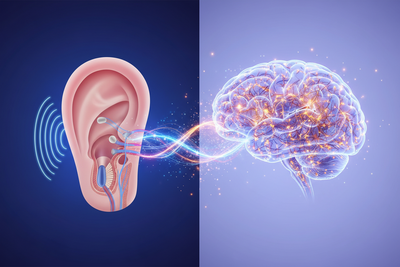
Tinnitus is the perception of sound — ringing, buzzing, hissing, clicking, or roaring — in one or both ears when no external sound is present. It's not a disease itself but a symptom, usually indicating that something in the auditory system has been disrupted.
It's more common than most people realize. According to a systematic review published in JAMA Neurology, about 14% of adults worldwide have experienced tinnitus, with roughly 2% experiencing a severe form that significantly affects daily life. In the United States alone, an estimated 25 million Americans have experienced tinnitus lasting at least five minutes in the past year (NIDCD).
What Is Hearing Loss?
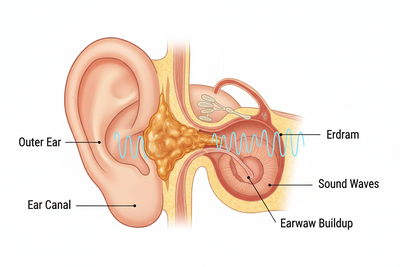
Hearing loss refers to a reduced ability to detect or understand sound. It can range from mild (difficulty in noisy environments) to profound (inability to hear even very loud sounds). Unlike tinnitus, which is about phantom sounds, hearing loss is about the absence or reduction of actual sound reaching the brain.
Over 1.5 billion people globally have some degree of hearing loss, according to the World Health Organization — making it one of the most common health conditions on earth.
How They Overlap
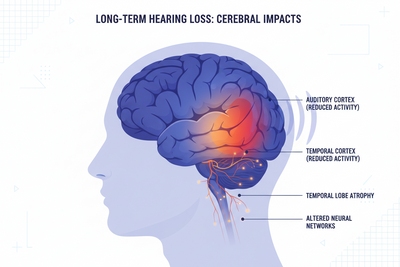
The two conditions frequently co-occur. Noise exposure that damages the inner ear's hair cells often causes both. A large German population study (the Gutenberg Health Study) found that tinnitus prevalence increased significantly with worsening hearing loss — peaking at nearly 79% among those with severe hearing impairment.
However, it's possible to have tinnitus without clinically measurable hearing loss, and it's possible to have hearing loss without tinnitus. They share risk factors — loud noise exposure, aging, certain medications — but follow independent paths.
Key distinction: Tinnitus is sound that isn't there. Hearing loss is sound you can no longer access. They often travel together, but treating one doesn't automatically treat the other.
What Can You Do About Each?
For tinnitus, there is currently no universal cure, but many people find meaningful relief through sound therapy (using background noise to mask the ringing), cognitive behavioral therapy, and lifestyle adjustments like reducing caffeine and protecting the ears from further damage. In cases where tinnitus overlaps with significant hearing loss, hearing aids have been shown to provide tinnitus relief as a secondary benefit.
For hearing loss, the primary treatment is hearing aids — and modern devices have come a long way. Today's options are small, rechargeable, and capable of filtering background noise while enhancing speech clarity in ways that earlier generations of technology could not.
If you're experiencing either condition persistently, the most important step is the same: see a hearing professional and get a formal assessment. What you learn from a hearing test will help clarify what's actually happening and what the most effective path forward looks like.
Soundbright hearing aids start at $99 with a 45-day trial. Learn more →