You're at dinner with friends. Someone makes a joke and everyone laughs — but you only caught half of it. Or your partner calls to you from another room and you answer "What?" for the third time. Sound familiar?
Asking someone to repeat themselves once in a while is completely normal. But when it becomes a habit — when "Sorry, what?" is your most-used phrase — your body may be telling you something worth listening to.
It's More Common Than You Think
Hearing loss is one of the most widespread health conditions in the world, yet one of the most overlooked. According to the World Health Organization (WHO), over 1.5 billion people globally live with some degree of hearing loss — nearly 20% of the entire world's population. In the United States alone, approximately 37.5 million adults report trouble hearing.
The numbers are expected to grow significantly. By 2050, the WHO projects that 1 in 4 people worldwide will experience some form of hearing loss.
Did you know? Hearing loss affects more Americans than diabetes and cancer combined, yet it receives far less public attention.
Why You Miss Words — Not Volume
Here's the part that surprises most people: hearing loss rarely means everything sounds quieter. More often, it means certain sounds become unclear — especially the ones that carry meaning.
In the English language, vowels (A, E, I, O, U) are low-frequency sounds — and those tend to stay audible longer. But consonants — the sounds that distinguish "cat" from "hat," or "fine" from "mine" — are high-frequency and softer. They're the first to go.
So when someone speaks, you may hear the melody of their voice but miss the actual words. That's why people with early hearing loss so often feel like everyone around them is mumbling. They're not. Your ears are simply losing their edge on the high end of the frequency range.
The 5 Most Common Situations That Give It Away
- Noisy environments feel overwhelming. A crowded restaurant, a family gathering, a busy street — these become exhausting because your brain is working overtime to filter background noise and catch speech at the same time.
- You struggle with women's and children's voices. Higher-pitched voices fall in the high-frequency range affected first by the most common type of hearing loss.
- You turn the TV up — and others complain about it. A volume level that feels normal to you is too loud for everyone else in the room.
- Phone calls feel harder than face-to-face conversations. Without visual cues like lip movement and facial expressions, your brain has fewer tools to fill in the gaps.
- You nod along even when you haven't fully heard. Pretending to understand — rather than asking again — is one of the most common (and unspoken) signs of hearing strain.
Why Most People Wait — And Why That's a Problem
Research consistently shows that people wait years between first noticing hearing difficulties and seeking help. The reasons are familiar: embarrassment, denial, or simply assuming it's "not that bad yet."
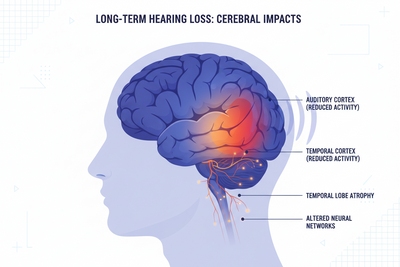
But untreated hearing loss doesn't stay still. Over time, it can affect your relationships, your confidence at work, and — according to growing research — your long-term cognitive health. Social withdrawal is one of the most documented side effects, as people begin avoiding situations where hearing is difficult.
Hearing loss is just an old person's problem. Today, it affects people across all age groups, and the earlier it's identified, the better the outcomes.
What Should You Actually Do?
The first and most important step is simple: get a hearing test. It's painless, quick, and gives you a clear picture of where your hearing stands. From there, modern solutions — including today's discreet, rechargeable hearing aids — can make a dramatic difference in clarity and quality of life.
You don't need to "wait until it gets worse." In fact, addressing hearing changes early is one of the best things you can do for your health, your relationships, and your peace of mind.
Key takeaway: Frequently asking people to repeat themselves isn't a quirk or a distraction issue — it's often the first measurable sign of hearing change. Recognizing it early means you have more options and better outcomes.
Think your hearing might be changing?
Soundbright offers FDA-registered hearing aids starting at $99, backed by hear.com and a 45-day risk-free trial. Start here →